© 2026 nimisham.in
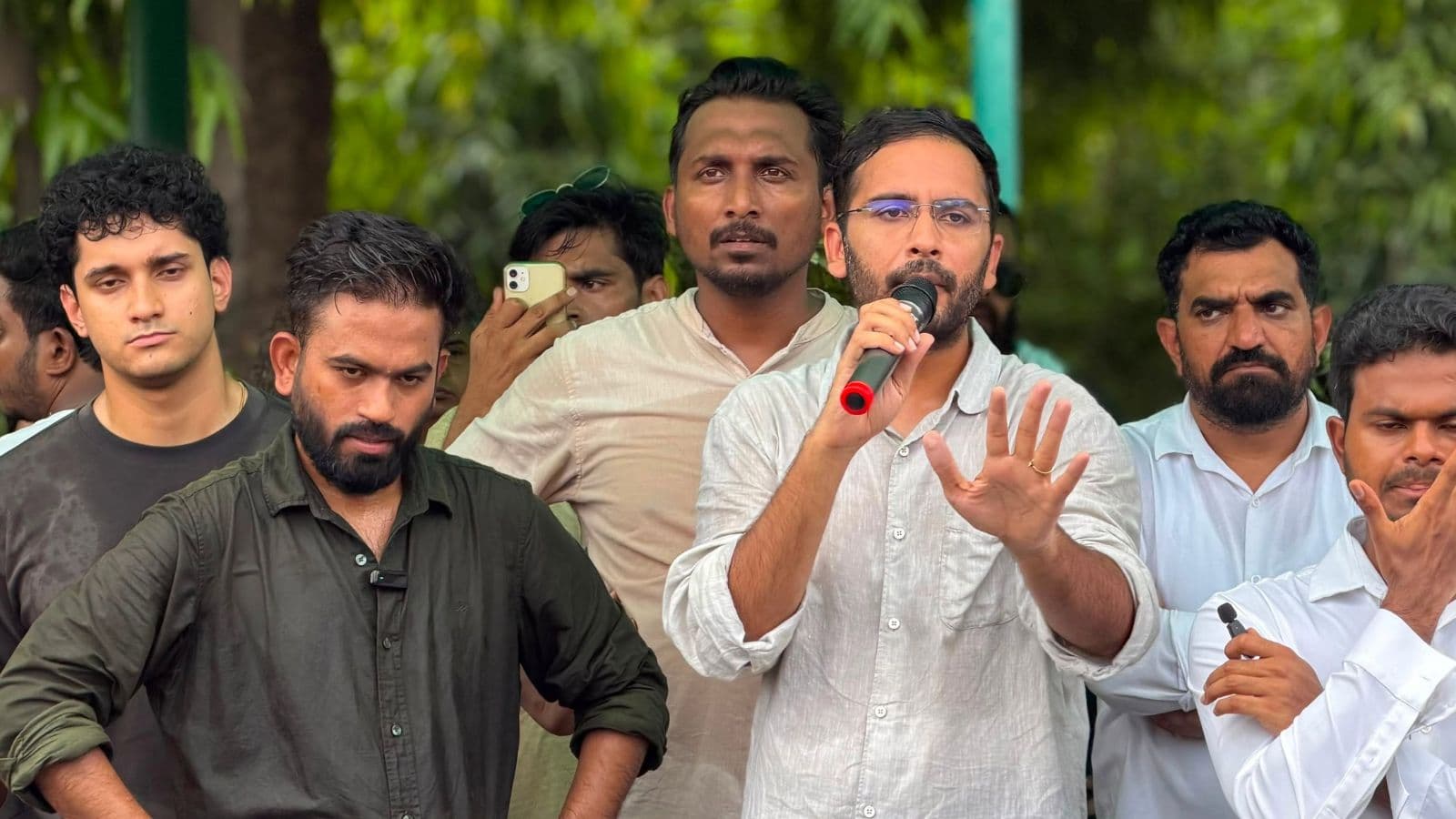
The Cockroach Janta Party s (CJP) political ambitions are limited to changing the way politics is being run in the country , spokesperson Ashutosh Ranka told the Indian Express s Srirupa Goswami.
The Cockroach Janta Party‘s (CJP) political ambitions are limited to “changing the way politics is being run in the country”, spokesperson Ashutosh Ranka told the Indian Express’s Srirupa Goswami.
The CJP, Ranka said, has “definitely shifted the political discourse in the right direction”. d said, “So we definitely do have political ambitions when it means, you know, to transform the way politics is happening in the country right now.”
Ranka was asked about comments by Ladakhi activist Sonam Wangchuk, who said in a recent podcast that “CJP leaders have political ambitions”, a topic that has also been discussed in other spaces.
“Now, as far as political ambitions are concerned, we have been very clear that we are fighting to change the politics of this country. We don’t want politics to operate the way it has been operating all this while. The politics of our country has continued to ignore the core issues. When was the last time there was a discussion in the Parliament about paper leaks? I don’t remember anything before the CJP movement started. When were these Gen Z dialogues or Gen Z events that we are talking about now happening before CJP started?”
Wangchuk had emerged as one of the prominent faces of the CJP-led protest at Jantar Mantar, where the group sought to draw attention to issues including education and employment. During the protest, Wangchuk also went on a hunger strike, lending prominence to the campaign and bringing wider attention to the group’s demands.
Ranka also spoke about CJP’s ‘School Thik Karo’ campaign, correcting the figure mentioned during the interview from 1,500 to 15,000 schools.
The campaign involved audits of government schools, with Ranka saying the exercise highlighted what he described as a “critical situation” in the country’s education system.
“I think the biggest takeaway is that the situation is really bad. It’s a critical situation. We keep talking about demographic dividend, but the reality on ground is far, far away from it,” Ranka said.
According to him, around 80–90 per cent of the schools visited were in what he described as “pathetic condition”. He said the findings were particularly concerning because a large section of India’s population continues to live in rural areas, where government schools are often the primary route to education and upward mobility.
“Majority of your population still lives in rural areas, whose only access to upward mobility is education. And by education, it’s essentially the government schools,” he said.
Ranka said the objective of the school audits was not merely to identify infrastructure problems or get individual schools repaired. He said CJP wanted the exercise to encourage people at the village level to hold governments, school headmasters and local education officials accountable.
“The idea of school audits was not just to get these schools fixed, but more importantly, to make sure that people at the ground level, at the village level, start holding the governments accountable,” he said.
Ranka said education would remain a priority for CJP, but the organisation also intends to expand its focus to unemployment and institutional accountability. He said areas such as judicial reforms, the integrity of the Election Commission and the mainstream media would also be taken up in the future.